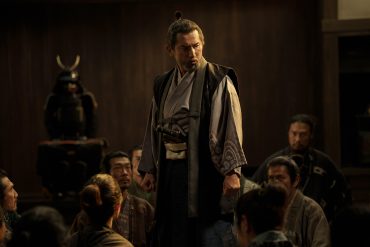
The Samurai and the Prisoner is very interested in the same ideas Kiyoshi Kurosawa has been circling his entire career, of times changing out from under us, undermining the relationships and norms we thought we knew. And, 40 years into making films, going hundreds of years back to the past has proved to be the perfect way to show he’s in lockstep with the times.
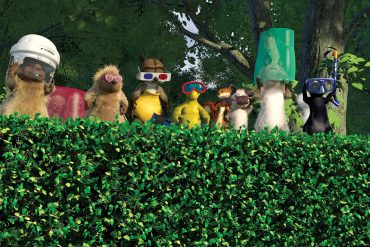
Sitting with the light of Over the Hedge flickering in my fixed, quiet living room, I feel like I’m rewilding the space around me, recovering the bouncing commotion and the embrace of flux. I remember our headlong household velocity. It leaps from my couch again.
I love Spotlight because I know the cost of breaking silence. I love Good Will Hunting because I’ve loved men who cannot pay it. I love The Departed because I love espionage, and I love espionage because I love double lives.
Over the two decades of their collaboration, the films of Michael Powell and Emeric Pressburger emerged as the working out of a love affair with Britain and Britishness.
And so, in the dream-logic of this particular shade, the express train in Brief Encounter is called the express not only because it doesn’t stop, but because, in its not-stopping, it expresses the shy heart of Laura Jesson.
This, too, is the condition of festival-speak. I pick some films over others because the framework of my experience is not experiential; it is exegetical. I organize myself around opinions I am going to have about things I have not yet seen.
Lucrecia Martel’s new documentary feature Nuestra Tierra is a portrait of a particular community on a particular plot of land in a particular municipality, but it opens in the non-descript vacuum of space.
The Last of the Mohicans (1992) and The Insider (1999) bookend the history of the United States from Michael Mann’s perspective. Though their circumstances are worlds apart, their stories expose the history of America.
"Because success was nowhere in sight, we kind of couldn't fail. There were no expectations; nobody was going to do anything for us. We could complain, but who would listen? You just had to make something. So we did! We made our own cafés, our own bands, our own record labels, our own movies, and it was great."
The world won't be the same without Tony Stella in it, but his spirit, integrity, and passionate love of movies lives on in the work he left behind.
So many of the movies I saw at this year's True/False Film Festival were concerned with human perceptions of time, memory, and legacy. In a world where reality is warped by fascism and generative AI, telling imaginatively true stories about real people seems especially important.
By developing subtle techniques for depicting loneliness, Different from the Others (1919) moves beyond sentimentality; instead of simply asking us to feel sorry for Conrad Veidt's character, it invites us to understand the ragged texture of his day-to-day life.