From the opening frames of Bringing Out the Dead, Nicolas Cage’s eyes are front and center, his weary, haunted visage telling you most everything you need to know about his character’s internal state. And while the film is ultimately about many things—suffering, guilt, compassion, redemption—it’s those eyes, throughout the movie and long afterwards, that stay with you.
I am Travis’ Essay on Love, Sex, Masculinity, and Fight Club.
Ratcatcher marks the beginning of a fascination that one of our greatest working directors has with inaction as a force propelling us to understand ourselves and the world around us.
The Sixth Sense is a horror movie, but it’s also a meditation on something deeper, offering up a sympathetic, often harrowing examination of how children handle the things they see but can’t process.
To this day, whenever I meet someone else who loves Drop Dead Gorgeous, I know we’ll get along.
“How does she do it?” you ask when watching Beau Travail. How is Claire Denis capable of infusing the human body with such depths of meaning, how does she render it so volatile?
Much like The Matrix, released only a few weeks prior in the spring of 1999, David Cronenberg’s eXistenZ plays with the question of whether we really inhabit the reality we think we inhabit. But whereas The Matrix posits systemic and structural forces keeping subjects in the dark, eXistenZ presents a more realistic version of our potential subjection to a simulated reality.
The Limey is, on the surface, a revenge flick. Steven Soderbergh, however, armed with a newfound grasp on his own filmmaking identity—forged in the fires of Schizopolis and sharpened in the making of Out of Sight—transformed Lem Dobbs’s script into an existential meditation on time and memory.
In Patricia Highsmith’s The Talented Mr. Ripley, Dickie doesn’t love Marge. Or at least, Dickie doesn’t say he loves Marge. In Anthony Minghella’s film of the same name, Marge is loved—maybe, probably, or at least she believes herself to be loved.
Much has been made of Frederick Wiseman’s supposed impartiality, but while his filming method is based in non-intervention, the breadth of detail he accumulates is arranged so that meaning emerges in their construction. However, in Belfast, Maine, Wiseman almost tips his hand.
While he wrote Magnolia, P.T. Anderson started to cry. And then he realized what he needed to do.
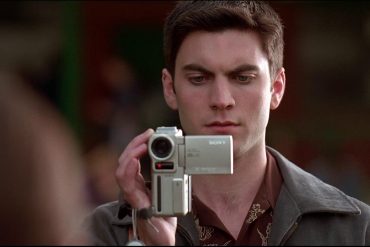
Perhaps if we view American Beauty with a remnant of empathy for our teenage selves, its merits will surface in a different light.