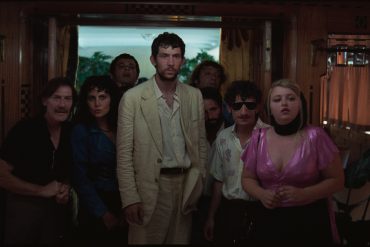
Writer/director India Donaldson’s astounding debut feature, Good One, explores landscapes both topographical and emotional, and ultimately, a crushing sadness of betrayal that can never be undone.
At heart, Don Hertzfeldt’s ME—a half-hour, lyrics-free animated sci-fi musical of apocalyptic tenor—wants us to wrestle with the question of how to reconcile being unable to talk to one another about how we interpret things, and what we find meaningful in them.
Annie Baker's first movie, Janet Planet, is a film so subtle it speaks in a whisper, but then, abruptly, it shouts.
Aaron Schimberg's A Different Man takes the experience of disability seriously by refusing to engage in tropes—a refreshing change for disabled viewers, like me, who rarely get to see our experiences depicted on screen.
This is the magic of Radu Jude’s Do Not Expect Too Much from the End of the World: the hardest reality takes the shape of a bad dream. A filmmaker famous for mixing history and fantasy—blurring the distinction between realism and the experimental—Jude's film blurs the line between documentary and fiction, to the point where the two begin to resemble one another.
The monsters are real, powerful, capable of exerting their wills on the world. Both Nosferatu and The Vourdalak abandon any pretense at knowing how this evil came to be; what’s scarier is that it exists already, that it’s caught the protagonists flat-footed, and that it’s potent.
Taken together, Almodóvar’s last three films—Pain and Glory, Parallel Mothers, and now The Room Next Door—solve one another, forming a sort of triptych about what it means to make art at the end of a life. Each asks what we leave behind in the world, what lasts, what remains, and together they form an almost scandalously hopeful answer: art is enough, and equal to love, and no different from it.
If you go into I Saw the TV Glow hoping for the straightforward catharsis of conventional horror movies—or the straightforward catharsis of many prominent transition narratives—you will be disappointed. Schoenbrun moves too slow, too thick, too open. But this is what allows them to create horror that buries itself inside you without you noticing, pinprick by pinprick, and lives there, sinking only deeper as time goes on.
On paper, Red Rooms is the ideal horror movie for a person like me, which is to say, a coward. It would be a misnomer to say Pascal Plante’s film has no violence though—it is violence, a bloodless film that is rich with blood.
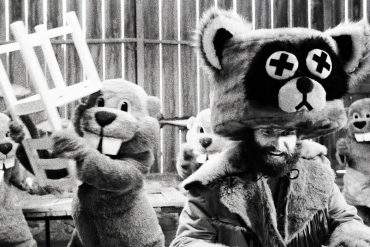
Hundreds of Beavers is not only an indie DIY pastiche of silent slapstick, looney Chuck Jones-esque animation, and Let’s Play video game walkthroughs—it’s also a subversive, quasi-religious parable about the transformative power of pilgrimage.
The Bright Wall/Dark Room team on their favorite movies, and movie moments, of 2024.
Francis Ford Coppola's Megalopolis is a gesture, a broad brushstroke, an impassioned plea, an aria in which the belladonna collapses on stage. It’s a message in a bottle, sent downstream in the hopes of finding the right person, which may in fact have been Coppola all along.