The Wonderful Story of Henry Sugar finds Wes Anderson at his most rigorously experimental, committing to Anderson’s curational ‘style as form’ strategy not as a means of ferrying feeling but as its very manifestation.
This month we’re joined by writer, critic, and editor Nicholas Russell to chat about Maestro. We get into: what makes a Bradley Cooper Film, when weird voices work, that epigraph, tension as structure and provocation, what’s going on with the ending, getting moved by Mahler, and more.
Infinity Pool is a synesthetic kaleidoscopia of narcotic dread, a mesmeric tour map into the nature of human identity and the death drive that motors it, defines it, obliterates it.
Throughout May December, graduation (as event, as trope; moving from one degree to the next, successful completion, training) competes with maturation for best overall conceit; each is more than window dressing to the present drama of Elizabeth’s unwelcome investigations. What Todd Haynes builds is less a trick mirror than a kaleidoscope, to refract a thought in all directions.
History, Oppenheimer suggests, is made up of agendas and counter-agendas, narratives and counter-narratives, fictions imposed onto a reality where truth has diminishing relevance if it ever mattered at all. Nolan’s films have always had a double-edged relationship with truth, full of noble lies and spiraling self-delusions, their characters manipulating themselves and each other as much as the reality around them.
More than any other film in 2023, Evil Dead Rise served as the most astute tribute to the democratic, unfussy glory of the cinema experience, one of those true communal events that are so often fetishized yet elusive.
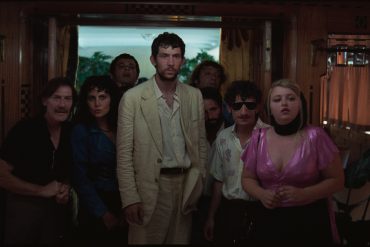
La Chimera feels like a dream, talking to and over and under my sense of understanding. It feels like I made it up. It was the film of my year—the year when there was so much lost.
Justine Triet’s Anatomy of a Fall is simple on the surface, but conceals a devilishly complex critique beneath its unadorned setup.
Andrea Pallaoro’s Monica is a slow, careful film, one that trusts the audience to interpret the expressions of its actors rather than feeding us meaning through dialogue and plot.
I didn’t exactly remember the story about Reality Winner. I recognized her uncanny name and its association with the word whistleblower. Whether I supported or condemned what she’d done had slipped through my memory. This lapse, an automatic deleting, made the story seem as though it may not have held much importance during the onslaught of news in 2017. Maybe the nation’s addled collective memory could stand to forget the answer to this particularly anxious American question: “What the hell happened here?”
Looking back from the cusp of a new year—newsrooms gutted, another election looming, and the ultra-rich profiting—Succession’s acid satire burns deeper than ever.
Kelly Reichardt's Showing Up pays attention in the measured way that someone might stand before a painting they admire. But instead of showing the finished work, it watches the work being made: long, slow takes of an artist in her garage studio, carving away at clay.